 Professional Tooth Whitening
Professional Tooth Whitening
Professional Tooth Whitening
A brighter smile through evidence-informed, clinician-led treatment carefully tailored to your shade, your enamel, and your lifestyle.
A brighter smile can feel like a small change with a big effect. If you're considering tooth whitening options in the UK, you want clear information, sensible expectations, and reassurance that safety comes first. This page is written for everyday people first-timers, those preparing for a milestone event, and anyone who wants a professionally supervised approach that balances results with oral health.
You may be worried about sensitivity or unsure whether whitening will work for your teeth. That's entirely normal. Expect a simple, clinician-led process that starts with an assessment, explains likely results in everyday terms, and chooses either an in-clinic procedure or a professionally supervised home programme depending on your needs.
What is described here focuses on professional tooth whitening available across the UK: how it works, how clinicians check suitability, what to expect on the day, and how to care for your smile afterwards. This is not about dramatic, theatrical changes; it is about realistic improvements tailored to your shade, your enamel, and your lifestyle. Short anonymised examples make points relatable: a bride-to-be who wanted a modest brightening ahead of her wedding photos, and a new presenter who sought subtle confidence for on-screen work.
You'll find straightforward sections on benefits, treatment steps, safety checks, types of whitening, candidacy, and common questions. Technical terms are explained with brief parenthetical clarifications when needed. Read the FAQs for quick answers, or follow the aftercare guidance to protect results over months and years.
Throughout this guide, the emphasis is on evidence-informed care and on the role of trained clinicians in delivering or supervising treatment. The aim is to help you make an informed decision, reduce anxiety, and understand practical steps you can take to keep a brighter smile looking natural and healthy.
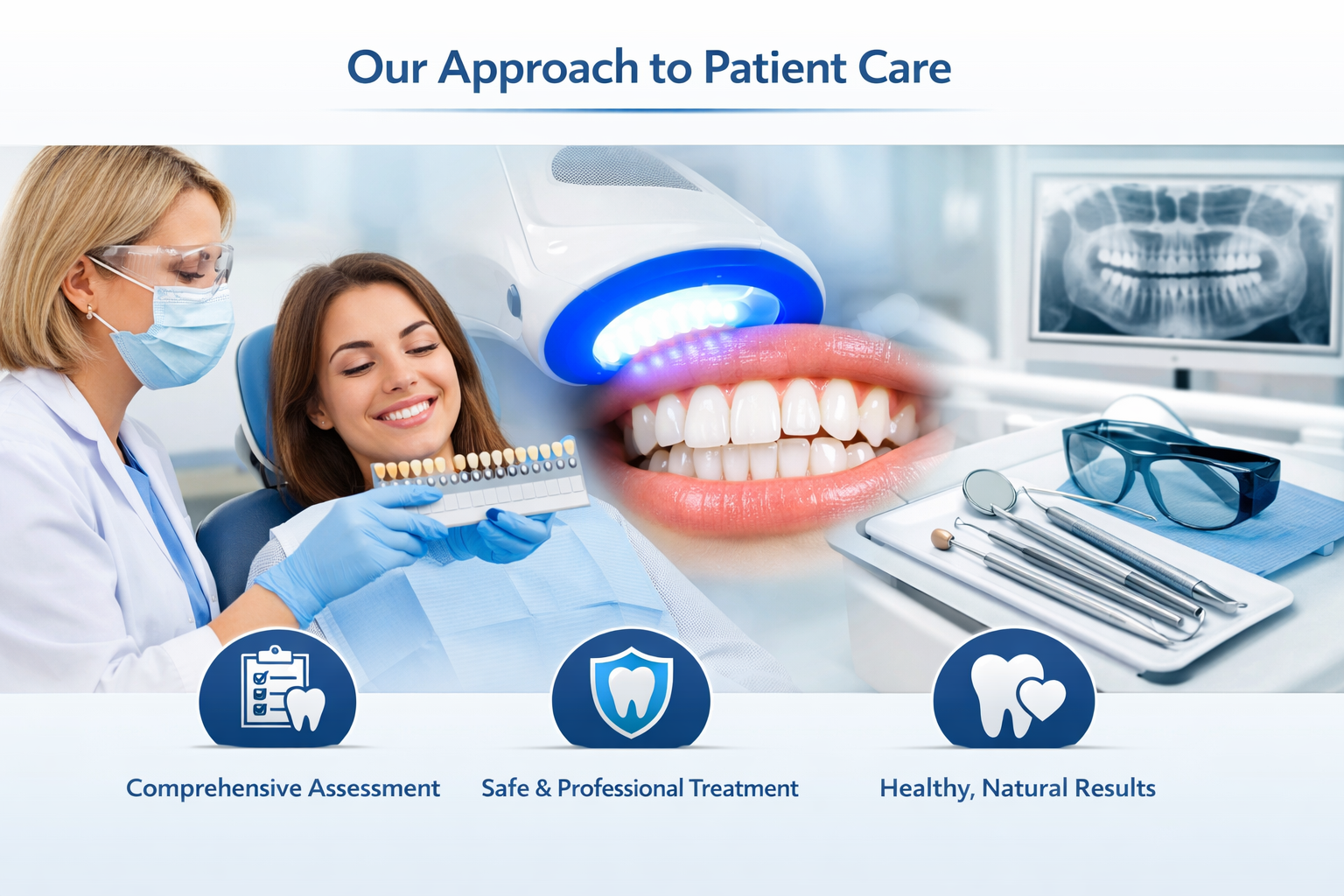
Many people choose professional tooth whitening in the UK because it brings together noticeable cosmetic improvement and strong clinical standards. A brighter smile can make a meaningful difference to confidence, whether in social settings, professional environments, or everyday interactions. However, the real value of professional whitening lies not only in the results, but in the safe and regulated way those results are achieved.
In the UK, tooth whitening is legally restricted to qualified dental professionals such as dentists, dental hygienists, and dental therapists, in line with guidance from the General Dental Council. This regulation is important because whitening products contain active ingredients that must be used correctly to avoid damage to enamel, gums, or existing dental work. When you choose a UK-based clinical service, you benefit from an initial assessment that checks for tooth decay, gum disease, enamel wear, or restorations that could affect the outcome. This ensures the treatment is appropriate and tailored to your specific needs.
Another reason many people opt for professional whitening in the UK is the quality and concentration of approved whitening agents. Products are regulated under UK and European safety standards, meaning the strength of whitening gels is controlled and used under supervision. This reduces the risk of complications and improves predictability. Clinicians can also customise trays for at-home professional systems or carefully monitor in-clinic treatments to achieve even, natural-looking results rather than an artificial or overly bright appearance.
Sensitivity management is another key advantage. Some individuals experience temporary sensitivity during or after whitening. In a professional setting, clinicians can adjust the treatment schedule, recommend desensitising products, or modify the strength of the gel to maintain comfort without compromising results. This level of oversight is not available with unregulated or cosmetic-only providers.
Choosing tooth whitening in the UK offers peace of mind. You know the treatment is delivered within a regulated healthcare framework, with clear standards of hygiene, documentation, and aftercare advice. Rather than simply purchasing a product, you are receiving a professional service designed to protect your oral health while enhancing your smile in a safe, measured, and responsible way.
Visible improvement in tooth shade without altering tooth shape, delivered through personalised protocols suited to your sensitivity and enamel condition.
Professional monitoring produces faster, more consistent results than unregulated at-home products, reducing the risk of uneven outcomes or overuse.
Comprehensive aftercare guidance to preserve results and protect tooth health over the long term, with supervised top-up strategies as needed.
Professional whitening aims to lighten natural tooth colour. It does not change the colour of veneers, crowns, or certain deep intrinsic stains reliably. Expect moderate to noticeable improvement; the exact degree depends on staining type and enamel structure. A teacher wanted a subtle lift for the new term; after a supervised home course, she reported that colleagues noticed a fresher smile without it seeming like anything had changed. That kind of realistic improvement is common.
Choosing professional tooth whitening is often less about chasing maximal whitening and more about achieving a controlled, reliable result that fits your face and your life. Professional oversight, predictable outcomes, and sensible aftercare are the primary reasons people opt for tooth whitening services in the UK.
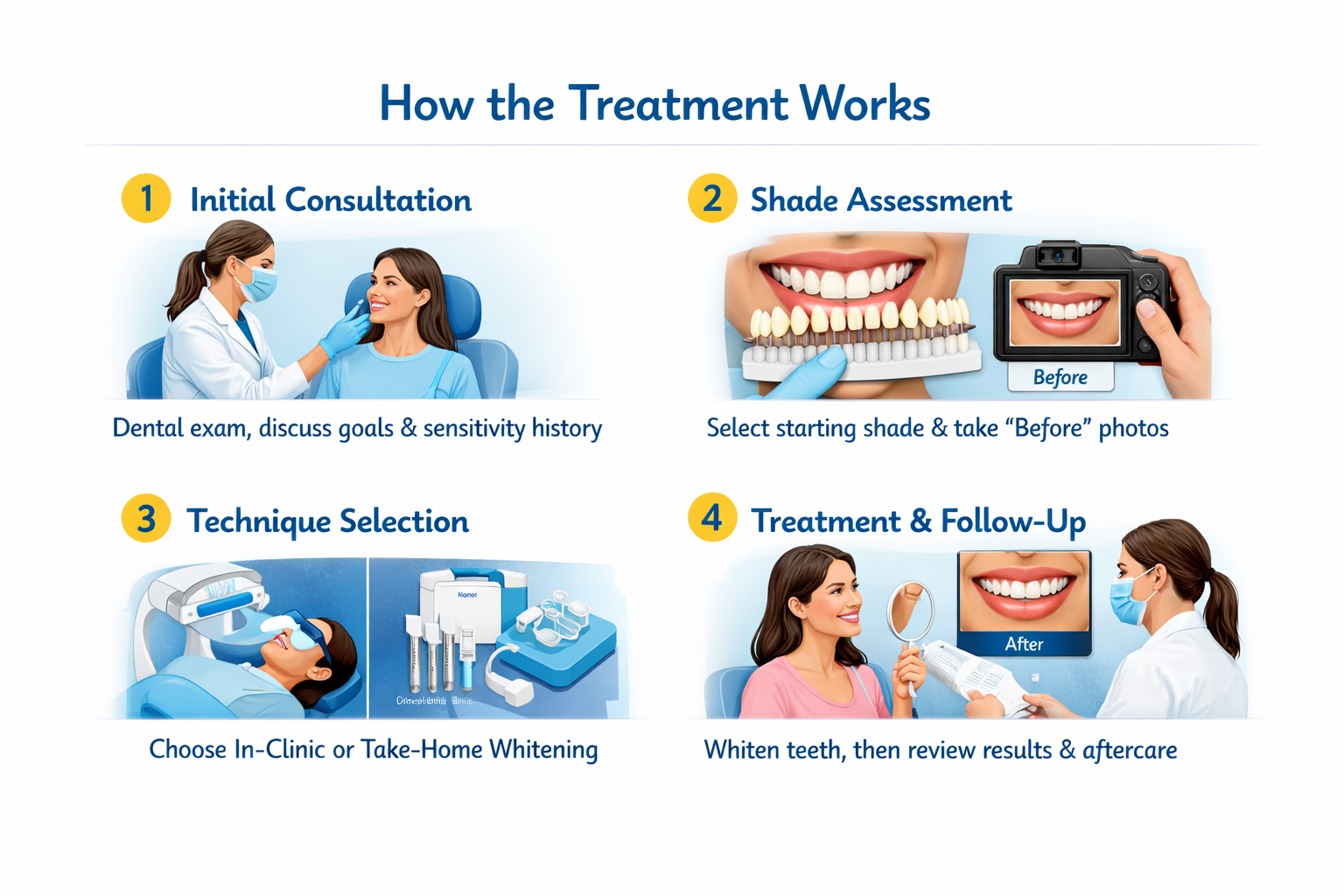
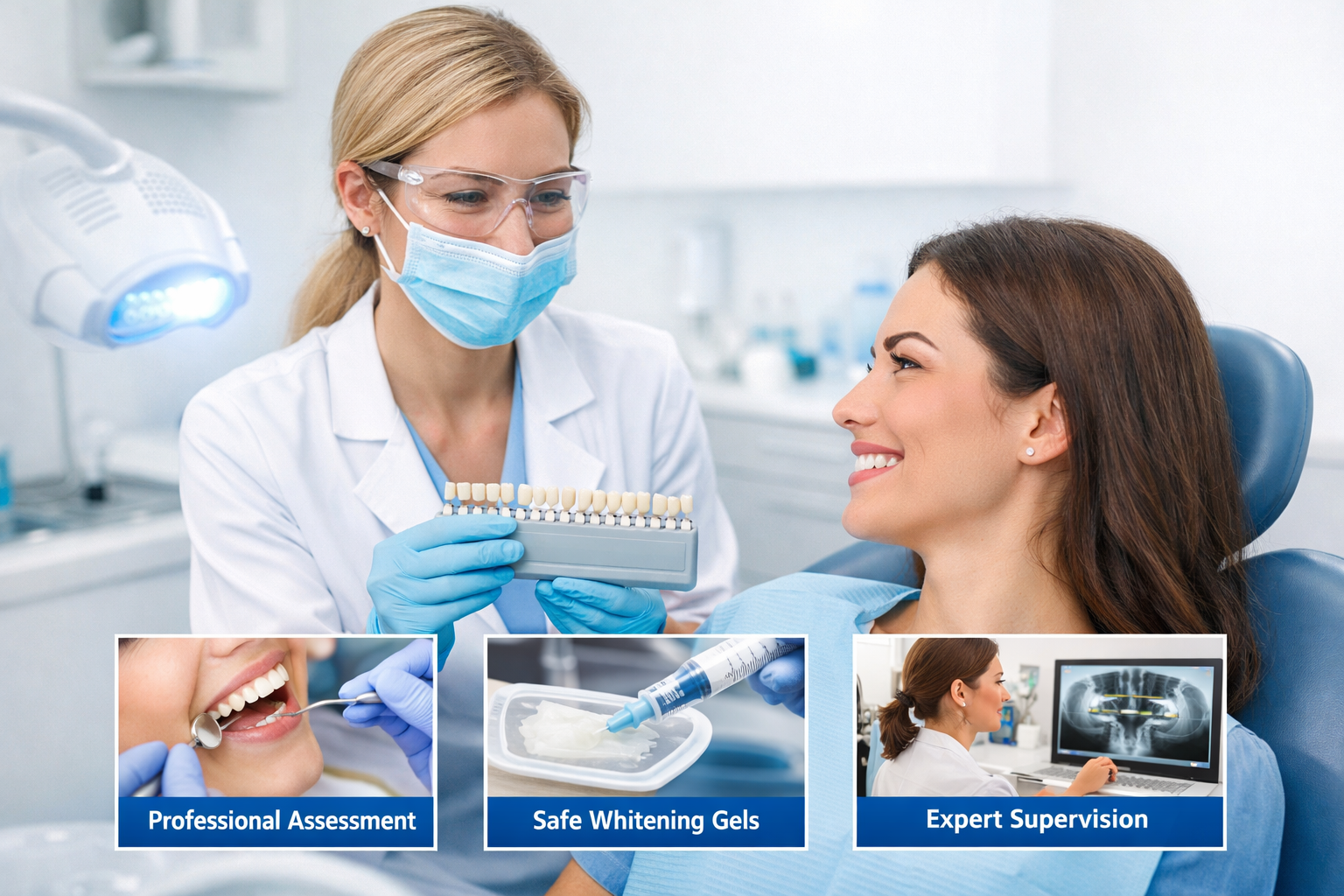
The clinician checks your general dental health, looks for untreated decay, assesses gum health, and reviews any restorations. They ask about sensitivity history, dental routine, and cosmetic aims.
A shade guide (a simple chart of tooth colours) records a starting point. Standardised photographs document before-and-after changes and track progress.
After assessment, the clinician recommends either an in-clinic procedure or a professionally supervised home whitening kit based on sensitivity risk, desired speed of change, and daily routine.
Treatment is carried out with ongoing monitoring. Post-treatment, shade records and photos compare results, and a tailored aftercare plan is provided.
Teeth are cleaned with a gentle polish to remove surface deposits and isolated so gums and lips are protected. Isolation typically involves a soft rubber shield or a carefully placed barrier. A professionally formulated peroxide gel is then applied to the tooth surfaces. Concentrations used in clinics are higher than over-the-counter options and are applied by or directly supervised by a clinician.
Some clinics use a light or laser to accelerate the action of the gel; others rely on time alone. The method chosen does not guarantee better results for every person, but it can reduce treatment time in some protocols. A single clinic session often lasts 45–90 minutes. Depending on the starting shade and desired change, one or more sessions may be scheduled. Clinicians monitor sensitivity during treatment and can modify the protocol or pause if needed.
The clinician makes accurate impressions (moulds) to create thin, well-fitting custom trays that hold whitening gel against the teeth. A low-to-moderate strength peroxide gel is provided along with clear written instructions on how long to wear trays each day often nightly or for a set number of hours.
The clinician arranges follow-up checks to monitor progress and sensitivity. This supervision is a key safety difference from off-the-shelf kits. Supervised home courses commonly run for one to four weeks, depending on the product and the desired change.
Some pathways combine an in-clinic session with a short supervised home course for touch-up and to gently reach the final shade with reduced sensitivity.
Post-treatment sensitivity, if any, is discussed and addressed with desensitising toothpaste or temporary adjustments to the regimen. Shade records and photos are used to compare results. The clinician provides aftercare guidance and suggested timelines for maintenance.
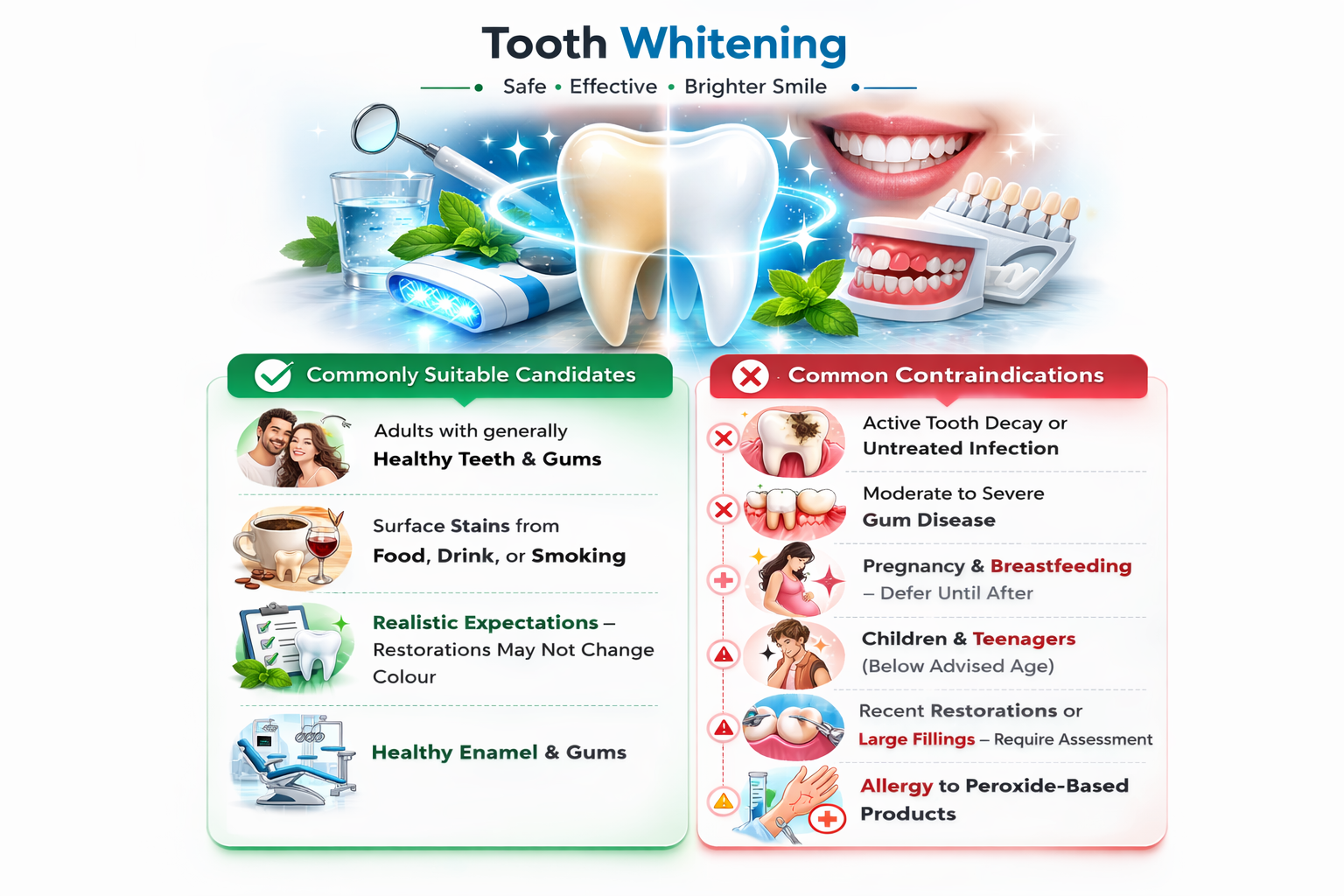
People with very thin enamel or chronic sensitivity may be advised against aggressive protocols and instead offered a supervised, gradual approach. Teeth with intrinsic stains from trauma, certain medications, or developmental conditions may not respond fully to whitening and may instead be better managed with restorative options.
Clinicians balance the desire for cosmetic improvement with oral health considerations. If a contraindication exists, the clinician offers alternative solutions or defers whitening until underlying issues are resolved. The aim is always to protect clinical health first, then address cosmetic goals.
| Method | Typical Speed | Typical Sensitivity | Advantages | Considerations |
|---|---|---|---|---|
| In-Clinic Whitening | Fast — visible change in one visit | Moderate (monitored) | Quick results, supervised by clinician, standardised application | Higher peroxide strength may increase temporary sensitivity |
| Supervised Home Whitening | Moderate — days to weeks | Lower to moderate (gradual) | Gentle, customised trays, good control over progression | Requires daily use and follow-up checks |
| Over-the-Counter Products | Slow to minimal | Variable (unpredictable) | Convenient, low immediate cost | Less predictable, uneven results, no clinical oversight, risk of overuse |
Rapid improvement suited to event timelines. Single-session convenience for many people with immediate clinical monitoring. Higher active concentrations are used, so careful application and protection of the gums is essential. Some people experience temporary sensitivity following sessions. In-clinic sessions are often well-suited to people who need a reliable, quick lift for a specific date or who respond well to short, supervised treatments.
Trays are custom-made to produce an even result. Lower concentrations over longer periods tend to cause less acute sensitivity, and clinician check-ins keep treatment on track. Results take longer to appear than some in-clinic options, and the approach requires discipline to follow nightly or daytime routines. This is a popular choice for people with mild sensitivity or those seeking a gradual, controlled improvement.
Widely available and inexpensive, OTC products may be suitable for very minor surface staining in some cases. However, no clinical assessment means underlying issues may be overlooked. Generic trays can cause uneven gel distribution and gum irritation. Concentration and application duration may be inconsistent, risking overuse.
Results depend on staining habits: coffee, red wine, smoking, and certain foods darken teeth over time. Professional maintenance — touch-ups using supervised trays or short in-clinic refreshers prolongs improvement. Supervised home kits make future top-ups easier and safer.
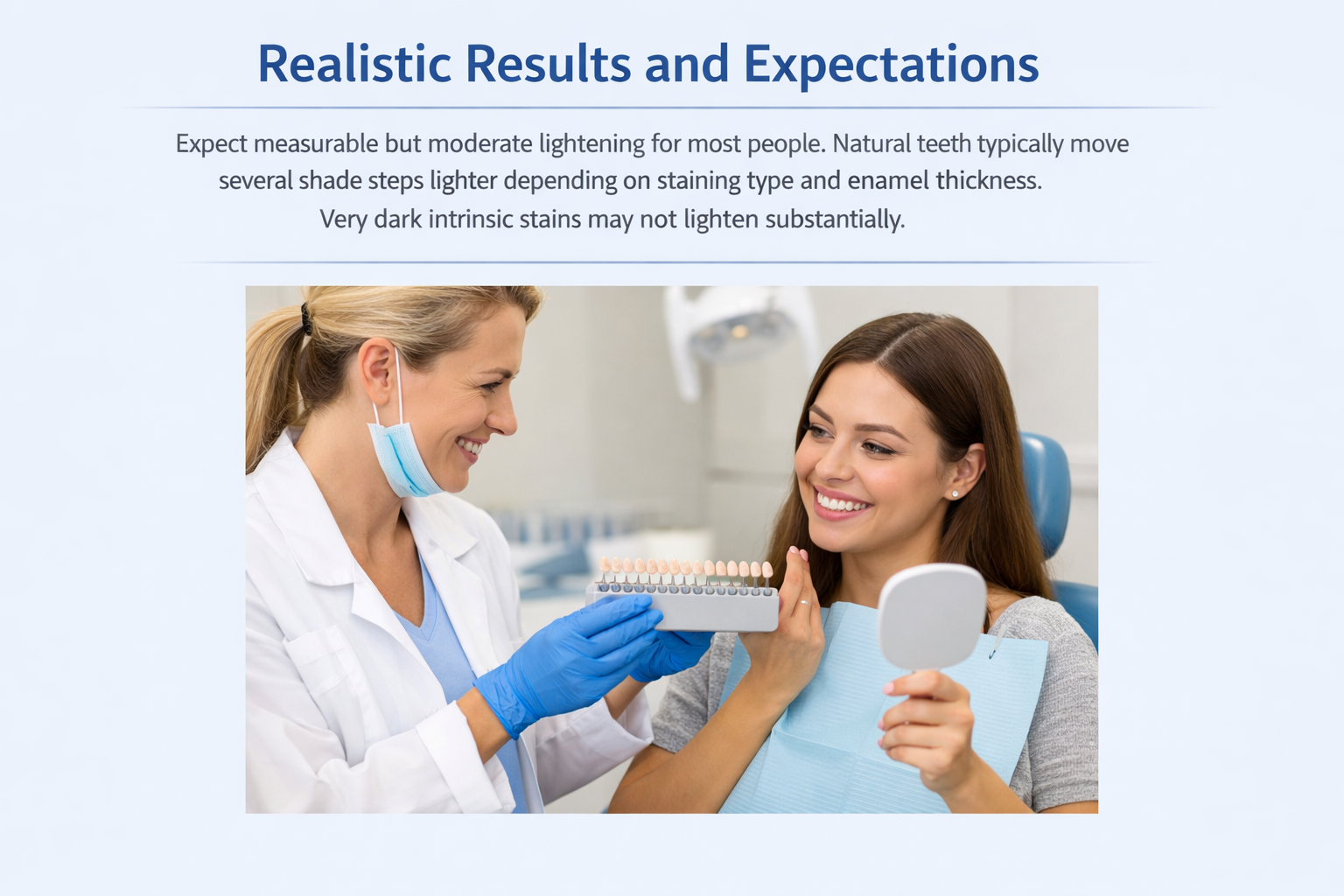
Expect measurable but moderate lightening for most people. Natural teeth typically move several shade steps lighter depending on staining type and enamel thickness. Very dark intrinsic stains may not lighten substantially.
Subtle, natural improvement is common not a "Hollywood white" unless extensive bleaching protocols are used and clinically appropriate. Professional trays and in-clinic techniques aim to deliver even results across visible teeth with consistent shade uniformity.
In-clinic treatments often produce immediate visible change after a session, with further changes appearing over the following days as teeth stabilise. Supervised home courses show gradual improvement over the course, often noticeable within one to two weeks.
Clinicians often keep anonymised before-and-after photographs for clinical records. These help you and the clinician judge progress and set realistic next-step expectations.
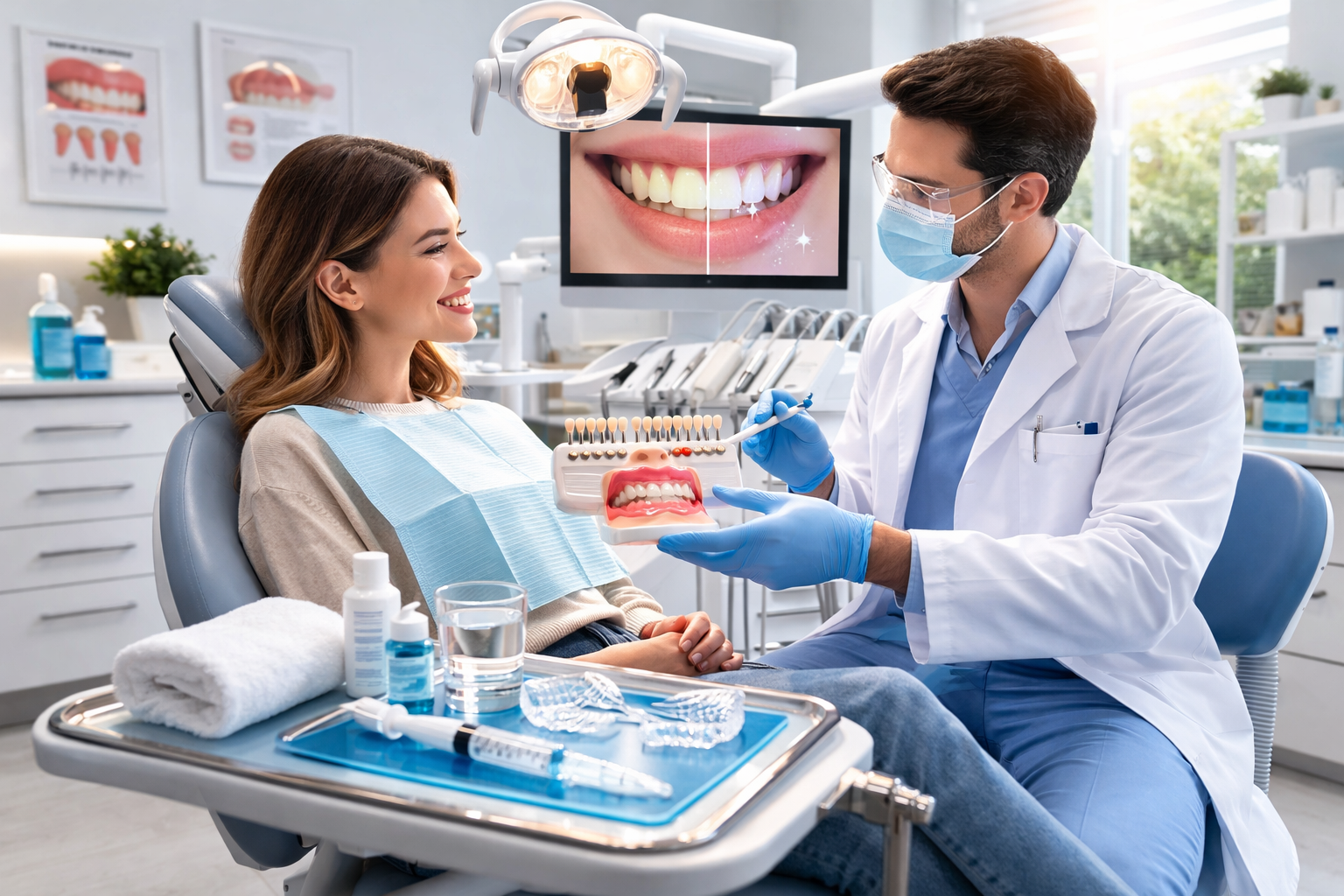
Trained clinicians carry out safety checks before any whitening begins. They confirm there are no untreated infections, major gum problems, or active decay that could be aggravated by whitening. They review current dental restorations and explain how those will behave during and after treatment.
A suitability check is straightforward: the clinician inspects teeth and gums, asks about sensitivity history and medical conditions, and reviews current medications that might influence sensitivity or oral health. Certain medications and health conditions can affect suitability; the clinician will discuss these openly and without judgment.
Sensitivity is the most common concern. Clinicians reduce risk by choosing an appropriate gel strength for your teeth, recommending desensitising toothpaste containing potassium nitrate or fluoride to use before and after treatment, offering staggered protocols with shorter application times to begin with, and pausing or adjusting treatment if sensitivity increases.
Clinics in the UK follow recognised hygiene practices: single-use disposables where appropriate, sterilised instruments, and clean surfaces. Trays are made from safe, medical-grade materials. If impressions are taken, they are handled per infection-control guidance. Well-run clinics keep clear records of materials used and of sterilisation processes.
Clinicians document the consultation, the shade assessment, and the agreed treatment plan. Consent is discussed and recorded in plain language so you understand potential risks and likely outcomes. Clinicians note any specific sensitivity issues and the steps agreed to manage them.
Professional tooth whitening is delivered within a framework of recognised practice standards. Clinicians work within these frameworks to ensure safe product use, correct application, and appropriate follow-up. Trained staff supervise the treatment and are available to respond to concerns during and after the active course.
An important part of clinical oversight is setting realistic expectations. Clinicians clarify what can be achieved and what might not respond to whitening for example, restorations or deep intrinsic stains. They explain that results vary and that follow-up or restorative adjustments may be needed at a later date.
If unusual pain or sensitivity persists after treatment, the clinician offers follow-up assessment and management. This may include temporary measures to reduce sensitivity or recommendations for further dental care if an unrelated issue is discovered.
Safety is achieved by trained assessment, customised protocols, and clear aftercare advice.
Sensitivity is managed proactively with multiple options for adjustment throughout the treatment.
Hygiene, record-keeping, and informed consent are standard practices that reduce risk compared with unsupervised approaches.
Maintain twice-daily brushing with fluoride toothpaste and a soft-bristle brush. Floss daily to keep gums healthy gums should be disease-free for best maintenance. Use a desensitising toothpaste if you experience transient sensitivity; continue for several weeks if needed.
Limit frequent consumption of staining agents: coffee, strong tea, red wine, cola drinks, beetroot, and curries. When consuming staining beverages, use a straw where practical to reduce contact with front teeth. Rinse your mouth with water after staining foods or drinks and wait 30–60 minutes before brushing.
Smoking and vaping both contribute to staining; avoiding them helps preserve whitening results.
Supervised home trays make periodic touch-ups simple: a short course every few months or as recommended by your clinician can preserve shade. A single in-clinic refresh may be suitable annually for some people, depending on lifestyle.
Avoid abrasive whitening toothpastes for prolonged daily use; choose a balanced toothpaste that supports enamel health. Mouthwashes with high staining potential (some chlorhexidine formulations) should be used under a clinician's advice if needed for other dental conditions.
Use potassium nitrate toothpaste or a fluoride gel as recommended by your clinician. Avoid very hot or very cold foods for a few days if sensitivity is present. If sensitivity is severe or persistent, contact your clinician for review.
Eat crunchy raw fruits and vegetables occasionally they can help remove light surface staining. Clean removable retainers or trays thoroughly; any residue left in trays can re-stain teeth or irritate gums.
Whitening is not a one-time permanent fix; it is a maintenance-friendly cosmetic treatment. With sensible habits and occasional top-ups under supervision, many people keep a noticeably brighter smile for months to years.
These anonymised accounts reflect the range of individuals who benefit from professional whitening and the kinds of results they experience.
Professional tooth whitening in the UK is centred on careful, clinician-led improvement rather than dramatic or artificial change. The aim is to enhance natural tooth colour in a way that looks fresh, balanced, and in harmony with your features. The emphasis is always on safe practice, structured assessment, and protecting long-term oral health. Whitening is not simply about appearance; it is about ensuring the enamel, gums, and any existing dental work remain healthy and stable before, during, and after treatment.
A key part of professional care follows guidance from bodies such as the General Dental Council and the British Dental Association, which reinforce that whitening should be carried out under appropriate clinical supervision. This ensures suitability checks are completed, medical history is reviewed, and any underlying concerns — such as gum inflammation, enamel wear, or untreated decay — are addressed first. Whitening works best when the foundations are healthy.
If you are unsure about sensitivity, previous fillings, crowns, or veneers, or simply which whitening pathway would fit comfortably into your lifestyle, the most helpful next step is a short clinical assessment. During this appointment, a dental professional will examine your teeth and gums, discuss your expectations, and explain what level of lightening is realistic. Not all stains respond in the same way, and some restorations will not change colour, so planning allows for predictable, natural-looking results.
That assessment also provides reassurance. Many people worry about discomfort, but when whitening is prescribed and monitored correctly, temporary sensitivity can usually be managed with adjustments to the protocol or the use of desensitising products. Clear guidance on aftercare such as maintaining good oral hygiene and moderating staining foods and drinks helps preserve the result for longer.
Professional whitening is about confidence built on safety. With thoughtful planning, appropriate supervision, and realistic expectations, most individuals achieve a brighter smile that still feels entirely their own.